
kim@leonmobility.com
+86-15150222860

Why Build Quality Inspection Matters
When evaluating an electric cargo tricycle, many buyers focus on specifications such as motor power, battery capacity, and load rating.
However, the real factors that determine long-term reliability are often hidden beneath the paint and body panels.
Poor welding, loose fasteners, improper wiring, and missing VIN identification can lead to expensive warranty claims, vehicle downtime, and safety risks.
A cargo tricycle may look impressive in a showroom but develop serious problems after only a few months of commercial operation.
This guide explains how professional importers and fleet buyers inspect electric cargo tricycles before placing bulk orders.
Vehicle Identification Number (VIN)
What Is a VIN?
The Vehicle Identification Number (VIN) is a unique code assigned to every compliant electric cargo vehicle.
Think of it as the vehicle’s fingerprint. It helps identify the manufacturer, production information, and compliance status.
For commercial buyers, a proper VIN is essential for registration, warranty support, insurance, and ownership verification.
VIN Requirements
According to industry standards:
• The VIN must be permanently attached to the vehicle
• The location must be clearly visible
• The code structure must follow standardized requirements
• The VIN must match all supporting documentation
Where to Find the VIN
On most electric cargo tricycles, the VIN can be found in one of the following locations:
• Frame head tube
• Riveted metal identification plate
• Directly stamped into the frame
VIN Inspection Checklist
Before accepting a vehicle, verify that:
• VIN is clearly readable
• VIN cannot be removed easily
• VIN matches shipping documents
• VIN matches inspection reports
Red Flags
Avoid vehicles with:
• No VIN at all
• VIN printed only on a sticker
• Damaged or unreadable VIN
• VIN that differs from documentation
Why this matters: Without a compliant VIN, vehicle registration and insurance may become impossible in many countries.
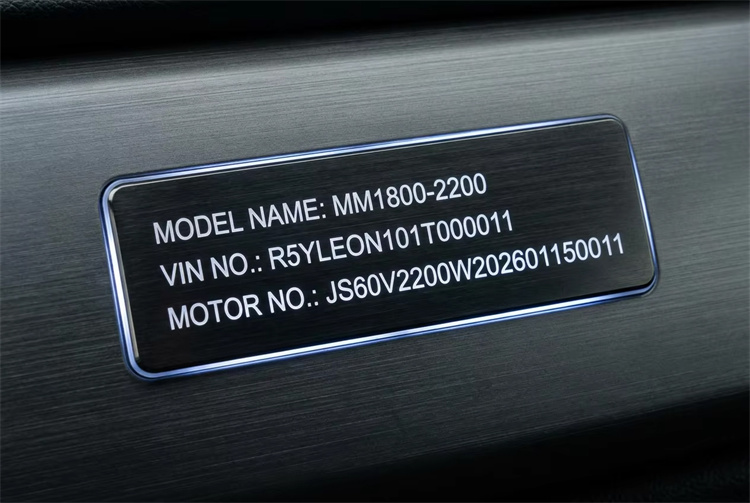
Below is example from Leon electric tricycle.
Structural Integrity: Weld Quality Inspection
Poor welding is one of the most common causes of frame failure in low-quality electric cargo tricycles.
Since cargo vehicles often operate under heavy loads, weld quality directly affects safety and service life.
What Good Welds Look Like
A high-quality weld should have:
• Smooth appearance
• Consistent weld bead width
• Uniform color
• Complete fusion between metal parts
• No visible defects
Common Welding Defects
|
Defect |
Description |
Potential Risk |
|
Missed Weld |
Required weld missing |
Structural weakness |
|
Cold Weld |
Incomplete metal fusion |
Cracking under load |
|
Porosity |
Small holes in weld |
Corrosion and fatigue |
|
Slag Inclusion |
Trapped welding |
residue Weak points |
|
Excessive Spatter |
Metal droplets around weld |
Poor workmanship |
How Buyers Can Inspect Welds
Check:
• Cargo box mounting points
• Front fork connections
• Rear axle support structure
• Suspension brackets
• Main frame joints
If welds appear inconsistent or unfinished, request additional quality documentation from the supplier.
Coating and Corrosion Protection
The paint or powder coating protects the frame from corrosion.
A vehicle operating outdoors will quickly develop rust if the coating quality is poor.
Signs of Good Coating Quality
• Smooth surface
• Uniform color
• No visible defects
• Strong adhesion
Signs of Poor Coating Quality
• Paint bubbles
• Blisters
• Peeling paint
• Surface scratches exposing metal
• Uneven color
• Flow marks or drips
Even small coating defects can become major corrosion points after long-term use.
Plastic Components and Seat Quality
Although often overlooked, plastic components reveal much about manufacturing quality.
Inspect:
• Fenders
• Battery covers
• Dashboard housing
• Side panels
Good plastic parts should have:
• Smooth finish
• Uniform color
• No warping
• No dents
• Consistent panel gaps
Seat Inspection
A commercial cargo vehicle seat experiences constant use.
Check for:
• Tight seat cover
• Clean stitching
• No wrinkles
• No cracks or tears
• Supportive foam padding
Electrical System & Wiring Harness Inspection
Electrical issues are among the most common warranty claims in electric vehicles.
A poorly assembled wiring harness can cause intermittent failures that are difficult to diagnose and repair.
Wiring Harness Requirements
A professional wiring harness should be:
Properly Routed
Wires should avoid:
• Sharp metal edges
• Moving components
• Heat sources
Properly Secured
The harness should be:
• Bundled neatly
• Clamped firmly
• Protected from vibration
Properly Connected
Connectors should be:
• Fully seated
• Locked securely
• Free from corrosion
Electrical Safety Checklist
Inspect for:
Item Inspection Point
Insulation No exposed copper
Battery Area No leakage or corrosion
Connectors No oxidation
Harness No cuts or abrasion
Wiring No loose connections
Warning Signs
Reject vehicles showing:
• Burning smell
• Melted insulation
• Loose connectors
• Corroded terminals
Functional Testing Before Acceptance
Every electrical component should be tested before shipment.
Verify operation of:
• Speedometer
• Odometer
• Headlights
• Turn signals
• Brake lights
• Horn
• Battery indicator
• Reverse warning system (if equipped)
Never rely solely on factory claims—always perform a complete functional test.
Fastener Torque: The Most Overlooked Quality Indicator
Loose fasteners can lead to:
• Steering instability
• Brake failure
• Suspension damage
• Wheel detachment
• Cargo box separation
Professional manufacturers verify all critical fasteners using calibrated torque wrenches.
Critical Fastener Locations
Pay special attention to:
• Steering column nuts
• Front suspension bolts
• Rear suspension bolts
• Front axle nut
• Rear axle nuts
• Cargo box mounting bolts
• Seat mounting hardware
How Professional Factories Verify Torque
Quality manufacturers:
1. Tighten fasteners to specified torque values
2. Verify using calibrated torque tools
3. Apply paint marks after inspection
4. Record inspection results
What Buyers Should Ask For
Request:
• Torque inspection records
• Quality control reports
• Final assembly checklists
If a supplier cannot provide these records, quality control may be inadequate.
Factory Audit Checklist for Importers
Before selecting an electric cargo tricycle supplier, ask for evidence of their quality control process.
Quality Documents
Request:
• VIN management records
• Incoming material inspection reports
• Torque inspection reports
• Final vehicle inspection reports
Production Process Evidence
Ask for:
• Welding workshop photos
• Assembly line photos
• Road test area photos
• Packaging process photos
Certifications
Depending on your market, verify:
• ISO 9001 Quality Management System
• CE Compliance Documentation
• Local market certifications
A reliable supplier should be able to provide these documents without hesitation.
10 Questions to Ask an Electric Cargo Tricycle Manufacturer
Before placing a bulk order, ask:
1. Where is the VIN located?
2. How is weld quality inspected?
3. Are torque inspections recorded?
4. Can you provide QC reports?
5. Are road tests performed on every vehicle?
6. How are wiring harnesses secured?
7. What anti-corrosion process is used?
8. Can you provide production videos?
9. What warranty support is available?
10. Can you provide customer references?
The answers often reveal more about a supplier than the vehicle itself.
Electric Cargo Tricycle Quality Inspection Checklist
Frame & Structure
• VIN present and readable
• Welds smooth and defect-free
• No rust
• Coating uniform
Plastic & Trim
• No dents
• No scratches
• Consistent panel gaps
• Quality seat finish
Electrical System
• Wiring secured
• Connectors locked
• No exposed wires
• All lights functional
Fasteners
• Torque marks visible
• No loose hardware
• Inspection records available
Frequently Asked Questions
How can I tell if an electric cargo tricycle is high quality?
Focus on VIN compliance, weld quality, wiring harness assembly, fastener torque verification, and overall build consistency rather than appearance alone.
What are the most common defects in electric cargo tricycles?
Common defects include poor welding, loose axle nuts, wiring problems, paint peeling, and improperly secured cargo boxes.
Why is the VIN important?
The VIN helps verify compliance, ownership, warranty status, and vehicle registration requirements.
How do professional buyers inspect electric cargo tricycles?
Professional buyers perform VIN verification, weld inspection, electrical testing, road testing, torque verification, and supplier factory audits before placing orders.
Final Thoughts
A shiny paint finish does not guarantee a reliable electric cargo tricycle.
The best buyers look beyond appearance and focus on the factors that truly determine long-term durability: VIN compliance, weld quality, wiring integrity, fastener torque, and documented quality control procedures.
By following this inspection checklist, importers and distributors can reduce warranty claims, avoid costly quality issues, and select suppliers capable of supporting long-term business growth.
Name: kim Gong
Mobile:+86-15150222860
Tel:+86-15150222860
Whatsapp:8615150222860
Email:kim@leonmobility.com
Add:G1 Shazhou Lake industry park, Zhangjiagang High tech zone,Jiangsu Province, China