
kim@leonmobility.com
+86-15150222860

A fat tire electric scooter is built for comfort, stability, and versatility. Whether you use it for daily commuting, weekend adventures, or commercial applications, regular maintenance is essential to keep it performing safely and efficiently.
Many common problems—such as reduced battery range, uneven tire wear, poor braking performance, or unexpected power loss—can often be prevented with simple routine maintenance.
This guide provides practical maintenance advice for every owner, from daily inspections to seasonal care and long-term storage. By following these recommendations and your manufacturer’s maintenance instructions, you can improve reliability, reduce repair costs, and help extend the service life of your scooter.
Why Regular Maintenance Matters
Routine maintenance is about more than keeping your scooter looking clean. It helps improve safety, maintain performance, and identify potential issues before they become expensive repairs.
Proper maintenance can help you:
Improve riding safety
Extend battery lifespan
Reduce unexpected breakdowns
Increase tire life
Maintain braking performance
Improve riding comfort
Lower long-term maintenance costs
Preserve resale value
A few minutes of inspection before and after riding can save both time and money in the future.
Fat Tire Electric Scooter Maintenance Schedule
The table below provides a general maintenance schedule. Always refer to your owner’s manual, as maintenance intervals may vary depending on the model, riding conditions, and manufacturer recommendations.
|
Maintenance Item |
Recommended Frequency |
|
Check tire pressure |
Before every ride |
|
Inspect brakes |
Before every ride |
|
Check battery level |
Before every ride |
|
Clean exterior |
Every 2–4 weeks |
|
Tighten visible bolts |
Monthly |
|
Inspect tires for wear |
Monthly |
|
Lubricate moving parts (if applicable) |
Every 3 months |
|
Inspect wiring and connectors |
Every 3–6 months |
|
Professional inspection |
Once a year or as recommended |
If you frequently ride on rough roads, in wet conditions, or carry heavy loads, consider performing inspections more often.
Pre-Ride Safety Checklist
Developing a quick inspection routine before every ride can help identify problems early.
Before riding, check the following:
✅ Tire pressure is within the manufacturer’s recommended range.
✅ Tires show no cuts, bulges, embedded objects, or excessive wear.
✅ Front and rear brakes respond smoothly.
✅ Battery has sufficient charge for your planned trip.
✅ Headlight, taillight, brake light, and turn signals (if equipped) are working properly.
✅ Horn functions correctly.
✅ Handlebars move freely without excessive play.
✅ No loose bolts or unusual rattling sounds.
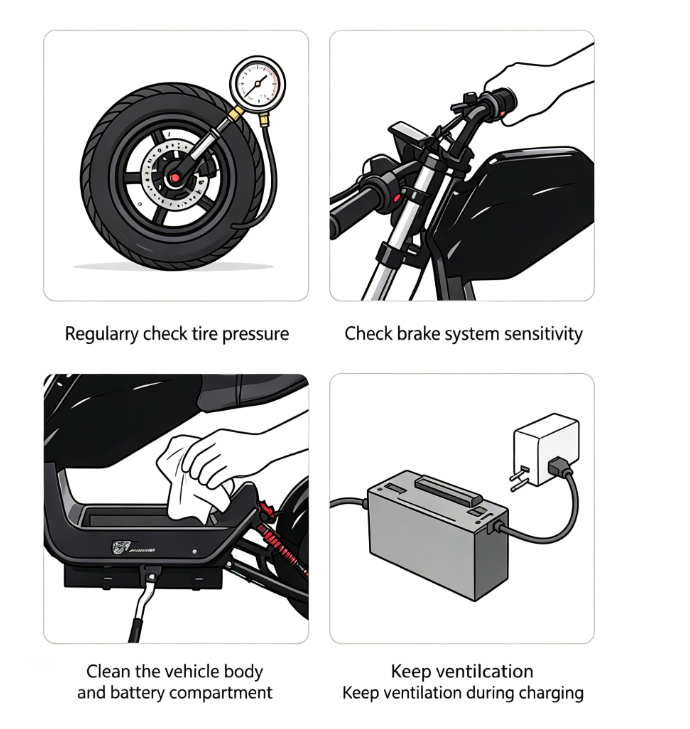
Completing this checklist takes only a few minutes and can significantly improve riding safety.
Cleaning Your Fat Tire Electric Scooter
Keeping your scooter clean isn’t just about appearance. Dirt, mud, road salt, and dust can accelerate corrosion and hide small problems that may develop over time.
Best Practices for Cleaning
Follow these simple steps:
1. Turn off the scooter and remove the key (if applicable).
2. Allow the motor and brakes to cool after riding.
3. Use a soft microfiber cloth or sponge with mild soap and water.
4. Gently clean the frame, wheels, fenders, and deck.
5. Dry the scooter thoroughly with a clean towel before storage.
Avoid High-Pressure Water
Never use a pressure washer or direct high-pressure spray on:
Battery compartment
Charging port
Motor
Controller
Electrical connectors
Display panel
Even scooters with water-resistance ratings can be damaged if water is forced into electrical components.
Clean the Tires
Fat tires collect more dirt than standard scooter tires.
After riding on gravel, sand, or muddy roads:
Remove stones trapped in the tread.
Inspect for cuts or punctures.
Check for uneven tread wear.
Keeping the tires clean also makes it easier to spot damage before it becomes a safety issue.
Battery Care: Protecting the Most Valuable Component
The battery is one of the most expensive parts of a fat tire electric scooter. Proper charging and storage habits can significantly affect its long-term performance.
Charge Before the Battery Is Completely Empty
For most modern lithium-ion batteries, it is generally better to recharge before the battery is fully discharged. Frequent deep discharges are unnecessary for everyday use and may reduce long-term battery performance.
If your manufacturer provides specific charging recommendations, always follow those guidelines.
Use the Correct Charger
Always use the charger supplied by the manufacturer or an approved replacement with the correct voltage and specifications.
Using an incompatible charger may:
Reduce battery lifespan
Cause charging failures
Trigger battery protection systems
Create potential safety risks
Avoid Extreme Temperatures
Lithium batteries perform best within the temperature range recommended by the manufacturer.
Whenever possible:
Avoid charging immediately after an intense ride if the battery is unusually hot.
Do not leave the scooter in direct sunlight for extended periods.
Avoid prolonged storage in freezing or extremely hot environments.
Extreme temperatures can temporarily reduce battery performance and may shorten battery life over time.
Long-Term Storage
If you will not use your scooter for several weeks or longer:
Store it in a cool, dry place.
Check the battery charge periodically according to the manufacturer’s recommendations.
Recharge as needed to prevent excessive self-discharge.
Proper storage helps maintain battery health during periods of inactivity
Tire Maintenance: Maximizing Safety and Performance
Your fat tires are the only components that remain in direct contact with the road. Their condition directly affects stability, comfort, braking, and handling.
Maintain Proper Tire Pressure
Incorrect tire pressure is one of the most common causes of poor riding performance.
Underinflated tires may:
Reduce riding range
Increase rolling resistance
Wear more quickly
Affect steering response
Overinflated tires may:
Reduce riding comfort
Decrease grip on uneven surfaces
Increase impact stress on the suspension
Always inflate your tires according to the pressure specified by the manufacturer rather than relying on a universal PSI value.
Inspect Tire Wear Regularly
Replace tires if you notice:
Worn tread
Deep cuts
Sidewall cracks
Bulges
Frequent air loss
Ignoring tire damage can increase the risk of punctures or reduced handling performance.
Rotate Riding Habits
While scooter tires cannot usually be rotated like car tires, smooth acceleration, gradual braking, and avoiding unnecessary skidding can help promote more even tire wear and extend tire life.
Brake Maintenance: Your Most Important Safety System
Your braking system is one of the most critical components of a fat tire electric scooter. Even a powerful motor and premium battery cannot compensate for poorly maintained brakes.
Before every ride, squeeze both brake levers to ensure they respond smoothly and consistently. If the brake lever feels excessively loose, unusually stiff, or produces unusual noises, inspect the system before riding.
Check Brake Pads Regularly
Brake pads gradually wear down during normal use. Riding with worn brake pads can reduce braking performance and may damage the brake rotor.
Inspect your brake pads regularly for:
Excessive wear
Uneven wear patterns
Cracks or contamination
Reduced braking performance
Replace brake pads according to your manufacturer’s recommendations or whenever they reach the minimum safe thickness.
Inspect Brake Rotors
Brake rotors should remain clean and straight.
Look for:
Deep grooves
Warping
Rust
Oil contamination
Never touch the braking surface with oily hands, as grease can significantly reduce braking efficiency.
Hydraulic Brake Maintenance
If your scooter uses hydraulic disc brakes:
Check for fluid leaks.
Inspect brake hoses for cracks.
Monitor brake lever feel.
Replace brake fluid according to the manufacturer’s maintenance schedule.
If you notice a sudden loss of braking performance, discontinue riding until the braking system has been inspected.
Motor Maintenance: Keep the Power System Running Efficiently
The electric motor is designed to provide years of reliable performance with minimal maintenance. However, regular inspections can help identify problems before they become costly repairs.
Inspect the Motor Housing
Check the motor for:
Loose mounting bolts
Cracks
Physical damage
Unusual vibrations
Burning smells
Water or mud accumulation
Any unusual noises or vibrations should be investigated promptly.
Keep the Motor Clean
After riding through mud, sand, or dusty environments, gently clean the motor exterior using a soft brush or dry cloth.
Avoid directing high-pressure water toward the motor, even if your scooter has a water-resistance rating.
Keeping the motor clean helps improve heat dissipation and makes it easier to detect leaks or damage.
Avoid Continuous Overloading
Repeatedly climbing steep hills while carrying heavy loads places additional stress on the motor.
Whenever possible:
Accelerate smoothly.
Avoid prolonged full-throttle operation.
Allow the motor to cool after demanding rides.
These habits help improve long-term reliability.
Suspension and Steering Inspection
One of the biggest advantages of a fat tire electric scooter is its comfortable ride. Maintaining the suspension system helps preserve that comfort while improving stability.
Every few months, inspect:
Front suspension forks
Rear shock absorbers
Steering bearings
Handlebar stem
Suspension mounting bolts
Watch for:
Oil leakage
Excessive movement
Squeaking noises
Rust
Loose fasteners
If the scooter begins pulling to one side or develops steering play, inspect the steering system immediately.
Electrical System and Wiring Inspection
Although most modern electric scooters require very little electrical maintenance, periodic inspections are still worthwhile.
Every three to six months, inspect visible wiring for:
Damaged insulation
Loose connectors
Corrosion
Moisture
Pinched cables
Pay particular attention to wiring near:
The steering column
Battery compartment
Motor connections
Charging port
If you discover damaged wiring, have it repaired using appropriate replacement parts. Improvised electrical repairs may reduce reliability and create safety risks.
Controller Maintenance
The controller is often described as the “brain” of an electric scooter. It manages communication between the battery, motor, throttle, and other electrical components.
Although controllers generally require little routine maintenance, you should periodically inspect for signs of trouble.
Possible warning signs include:
Intermittent power loss
Unexpected acceleration behavior
Error codes on the display
Burnt smells
Water damage
Because controller diagnosis usually requires specialized equipment, internal repairs should generally be performed by qualified technicians.
Seasonal Maintenance Tips
Different weather conditions place different demands on your scooter.
Summer Riding
High temperatures can affect both battery performance and tire pressure.
During hot weather:
Park in shaded areas whenever possible.
Avoid leaving the scooter inside a closed vehicle.
Check tire pressure more frequently.
Allow the battery to cool before charging if it becomes unusually warm after riding.
Winter Riding
Cold weather temporarily reduces lithium battery performance.
To improve winter riding:
Charge indoors whenever practical.
Allow the battery to warm naturally before riding if it has been stored in freezing temperatures.
Ride more gently during the first few minutes.
Clean road salt from the scooter after riding.
Long-Term Storage Guide
If you will not use your fat tire electric scooter for several weeks or months, proper storage can help protect the battery and other components.
Before storing:
Clean the scooter thoroughly.
Inflate the tires to the recommended pressure.
Store it indoors in a cool, dry location.
Protect it from direct sunlight and excessive humidity.
Cover the scooter to reduce dust accumulation while allowing adequate ventilation.
During long-term storage, periodically check the battery charge according to the manufacturer’s recommendations and recharge if necessary.
When returning the scooter to service:
Inspect the tires.
Test the brakes.
Check the lights.
Verify battery charge.
Perform a short, low-speed test ride before normal use.
Common Battery Charging Mistakes to Avoid
Many battery problems are caused by improper charging habits rather than manufacturing defects.
Avoid these common mistakes:
Using the Wrong Charger
Always use the charger specified or approved by the manufacturer.
Charging in Extreme Temperatures
Avoid charging the battery in extremely hot or freezing environments unless the manufacturer states it is acceptable.
Ignoring Battery Warning Signs
If the battery becomes unusually hot, swells, emits unusual odors, or shows signs of physical damage, stop using it and seek professional advice.
Allowing Moisture into the Charging Port
Ensure the charging port is clean and dry before connecting the charger.
Skipping Regular Inspections
Even if your scooter appears to function normally, periodic inspections help identify potential issues before they lead to unexpected failures.
Common Fat Tire Electric Scooter Problems and Solutions
Even with proper maintenance, electric scooters may occasionally experience problems due to normal wear, environmental conditions, or component aging.
Understanding common issues can help you identify problems early and decide whether a simple adjustment or professional service is required.
1. Fat Tire Electric Scooter Will Not Turn On
If your scooter suddenly fails to power on, check the following:
Possible Causes:
Low Battery Level
A completely depleted battery may prevent the scooter from starting.
Solution:
Connect the original charger and allow the battery to charge fully before testing again.
Loose Battery Connection
Vibration from daily riding may occasionally loosen electrical connections.
Solution:
Inspect accessible connectors and ensure they are properly secured.
Power Switch or Display Failure
A damaged power button or display connection may prevent normal startup.
Solution:
Check for error messages or unusual display behavior. Professional inspection may be required if the issue continues.
Controller or Electrical System Problem
If the battery is charged but the scooter remains unresponsive, the controller or another electrical component may require diagnosis.
2. Reduced Riding Range
A common concern among electric scooter owners is:
“Why doesn’t my scooter travel as far as before?”
Several factors can affect battery range.
Possible Causes:
Battery Aging
Lithium batteries gradually lose capacity after repeated charging cycles.
Solution:
If the range has significantly decreased over time, a battery capacity test may help determine whether replacement is needed.
Incorrect Tire Pressure
Low tire pressure increases rolling resistance and requires more energy.
Solution:
Check tire pressure and adjust according to manufacturer specifications.
Heavy Loads or Aggressive Riding
High speeds, steep hills, and heavy loads consume more energy.
Solution:
Maintain smooth acceleration and select riding modes appropriate for your conditions.
Cold Weather
Low temperatures can temporarily reduce battery performance.
Solution:
Store and charge the scooter in a suitable environment whenever possible.
3. Motor Makes Unusual Noise
A healthy electric motor should operate smoothly and quietly.
Unusual sounds may indicate:
Foreign objects
Loose mounting hardware
Bearing wear
Electrical problems
Recommended Actions:
1. Stop riding if the noise is severe.
2. Inspect the motor area for visible damage.
3. Check for loose bolts.
4. Seek professional inspection if the problem continues.
Ignoring abnormal motor sounds may lead to more expensive repairs.
4. Scooter Vibrates While Riding
Excessive vibration can affect comfort and handling.
Common causes include:
Incorrect tire pressure
Uneven tire wear
Wheel imbalance
Loose components
Suspension issues
Check:
Tire condition
Wheel alignment
Handlebar tightness
Suspension components
A properly maintained fat tire electric scooter should provide a smooth and stable ride.
5. Brakes Feel Weak
Reduced braking performance should never be ignored.
Possible causes:
Worn brake pads
Contaminated brake discs
Hydraulic brake issues
Loose brake cables
Recommended solution:
Inspect the braking system immediately and replace worn components when necessary.
Safety components should always receive priority over performance upgrades.
Fat Tire Electric Scooter Maintenance Checklist
Use this checklist to keep your scooter reliable throughout the year.
Before Every Ride
☐ Check battery level
☐ Test front and rear brakes
☐ Check tire pressure
☐ Inspect tires for damage
☐ Confirm lights and indicators work
☐ Check for unusual sounds
☐ Ensure handlebars are secure
Monthly Maintenance
☐ Clean the scooter
☐ Inspect tire wear
☐ Check visible bolts and fasteners
☐ Inspect charging port
☐ Check cables and connectors
☐ Examine brake performance
Every 3–6 Months
☐ Inspect electrical connections
☐ Check suspension components
☐ Lubricate applicable moving parts
☐ Inspect motor condition
☐ Check controller area
☐ Review battery performance
Annual Maintenance
☐ Complete full vehicle inspection
☐ Replace worn brake pads if needed
☐ Replace damaged tires
☐ Check suspension performance
☐ Test battery health
☐ Review all safety components
How to Make Your Fat Tire Electric Scooter Last Longer
A quality electric scooter can provide many years of reliable service when properly maintained.
Follow these long-term ownership tips:
Ride Smoothly
Aggressive acceleration, sudden braking, and repeated overloading increase wear on:
Tires
Brakes
Motor
Suspension
Smooth riding improves efficiency and reduces component stress.
Avoid Excessive Water Exposure
Although many scooters include water-resistant components, they are not designed for:
Heavy rain exposure
Flooded roads
High-pressure washing
Avoid unnecessary water exposure to protect electrical components.
Use Quality Replacement Parts
When replacing components, choose parts that match the original specifications.
Quality parts help maintain:
Safety
Performance
Compatibility
Reliability
This is especially important for:
Batteries
Chargers
Brake components
Tires
Controllers
Frequently Asked Questions About Fat Tire Electric Scooter Maintenance
How often should I maintain my fat tire electric scooter?
A basic inspection should be performed before every ride. More detailed maintenance, including tire inspection, brake checks, and electrical inspections, should follow your usage level and manufacturer’s recommendations.
How often should I check my electric scooter tire pressure?
Tire pressure should be checked regularly, ideally before frequent rides. Proper inflation improves comfort, efficiency, and tire lifespan.
How long do fat tire electric scooter tires last?
Tire lifespan depends on riding style, road conditions, tire quality, rider weight, and maintenance. Regular inspections and proper inflation can significantly extend tire life.
Should I charge my electric scooter after every ride?
Charging habits depend on battery type and usage. For modern lithium batteries, regular partial charging is generally acceptable. Follow the manufacturer’s recommendations for best results.
Can I ride a fat tire electric scooter in rain?
Many electric scooters can handle light rain, but they should not be exposed to excessive water. Avoid deep puddles and always dry electrical areas after wet rides.
Why is my electric scooter battery draining faster?
Possible reasons include:
Battery aging
Cold temperatures
Low tire pressure
Heavy loads
High-speed riding
Frequent steep climbs
Checking these factors can often identify the cause.
Are fat tire electric scooters harder to maintain?
Fat tire electric scooters do not necessarily require more complicated maintenance. The main difference is that larger tires, heavier frames, and higher-performance components require regular inspection to maintain optimal performance.
How can I extend my electric scooter battery life?
To maximize battery lifespan:
Avoid extreme temperatures
Use the correct charger
Avoid unnecessary deep discharges
Store properly during long periods of inactivity
Follow manufacturer charging guidelines
Final Thoughts: Keep Your Fat Tire Electric Scooter Running at Its Best
A fat tire electric scooter is an investment in convenient, comfortable, and efficient transportation. Regular maintenance ensures that your scooter continues delivering the performance, safety, and reliability you expect.
The most important maintenance habits are simple:
Keep your scooter clean.
Maintain proper tire pressure.
Take care of the battery.
Inspect brakes regularly.
Check electrical components.
Address small problems before they become major repairs.
With consistent care, a well-built fat tire electric scooter can provide thousands of miles of enjoyable riding.
Looking for a Reliable Fat Tire Electric Scooter Manufacturer?
At Suzhou Leon Technology, we specialize in designing and manufacturing high-quality fat tire electric scooters, Citycoco scooters, and electric mobility solutions for global distributors, wholesalers, and brand partners.
Our products focus on:
Reliable performance
Quality components
OEM/ODM customization
Export experience
Long-term customer support
Whether you are looking for a fat tire electric scooter supplier, Citycoco scooter manufacturer, or customized electric mobility products, our team can help you develop solutions for your market.
Contact us today to learn more about our electric scooter products and cooperation opportunities.
Name: kim Gong
Mobile:+86-15150222860
Tel:+86-15150222860
Whatsapp:8615150222860
Email:kim@leonmobility.com
Add:G1 Shazhou Lake industry park, Zhangjiagang High tech zone,Jiangsu Province, China